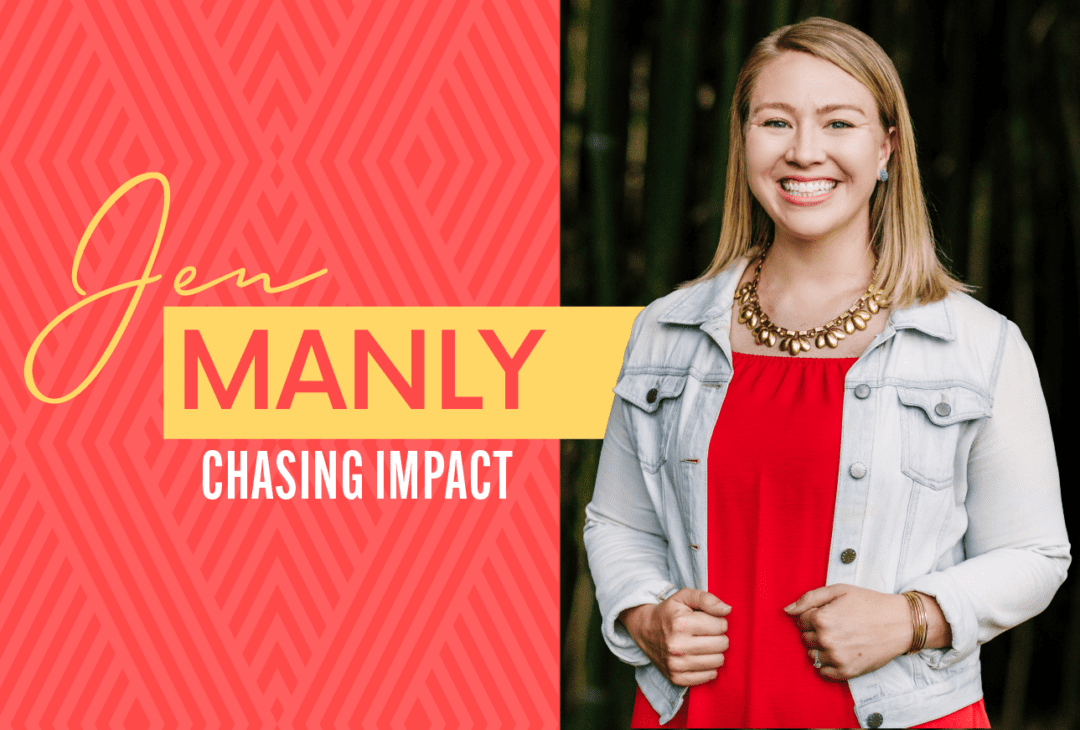
Jen Manly
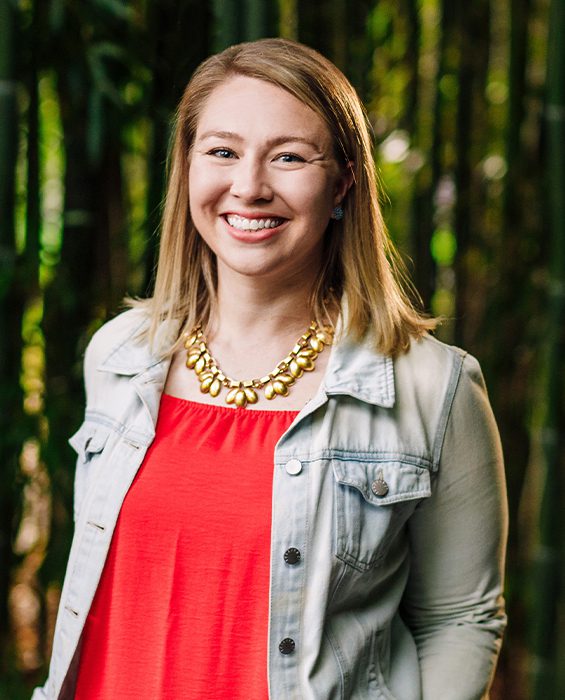
Jen Manly helps people avoid burnout through her action-oriented approach to purposeful productivity and empowered boundaries. With a focus on making work sustainable, she empowers audiences to take back their time and energy to do more of what they love without compromising their impact.
TOPICS
- Leadership
- Artificial Intelligence
- Professional & Staff Development
- Recruitment
- Personal Growth
- Burnout Prevention
- Well-Being
- Fraternity and Sorority Life
- K-12 Education
KEYNOTES
- Chasing Impact
- You First
- We Have Amazing Sisterhood! (And Other Things Every Chapter Says)
- Fake It Til You Make It? Hard Pass.
- The Boundaries Blueprint
- Conscious AI for Students
Primary/Secondary Education Specific
Getting to know
Jen Manly
Jen believes that people deserve to do BIG, meaningful work while also prioritizing themselves. She is passionate about helping people maximize their productivity to make time for what is most important, all without compromising their impact. Jen discovered her passion for intentional work initially as a teacher, where she found herself on the brink of burnout less than three years into a profession that she loved. Through applying productivity science and clearly articulated boundaries, Jen learned that by prioritizing the most impactful work, she was able to better serve students while also prioritizing her needs, passions, and the people she loves.
Jen has spent nearly a decade in education, teaching computer science at the middle, high school, and college levels. She is an education pioneer, bringing student-centered learning to a new level with the implementation of agile project management in her classroom. She is a co-author of the Agile Educator Guide, a two-time national teaching excellence awardee, and has served on curriculum writing teams at the local, state, and national levels. Her work has been featured in Edutopia, ISTE, and Glamour Magazine.
Jen received her undergraduate degree from the University of Georgia and her Masters of Arts in STEM Education from the University of Maryland, Baltimore County.
PROMOTIONAL MATERIALS
To help you promote your event with Jen, CAMPUSPEAK has created promotional templates you can use. In this folder, you will find resources for social media, a promotional poster for printing, and press photos you can use for your event.
Link to Promotional Materials.
LOGISTICAL MATERIALS
Below you will find logistical resources for the day of your event with Jen.
In-Person Event AV Needs (PDF)
Speaking Introduction (PDF)
KEYNOTES
Chasing Impact
The old saying goes: do what you love and you’ll never work a day in your life. Why is it then that so many passionate leaders burn out?
Through over 15 years of passion-centered work, ranging from leading her chapter’s sorority recruitment to non-profit experience and nearly a decade as a classroom teacher, Jen Manly intimately understands how doing work that matters can come at a price: your health and well-being.
Through her empowering keynote, Jen Manly challenges the notion that you have to do more to have a greater impact. Through her message of purposeful productivity, Jen shares a blend of actionable strategies grounded in productivity science, the importance of impact-focused prioritization, and real self-care that centers on setting boundaries and managing stress.
Audiences will leave with immediately implementable strategies to take back their time and energy so that they can avoid burnout while increasing their impact.
Learning Outcomes
As a result of attending the program, students will learn:
- How to prioritize work based on impact
- Strategies to tackle the most impactful work first
- How to set boundaries with different stakeholders to prioritize well-being and self-care
- How to manage guilt and stress associated with cause-centered roles
- Systems to streamline work and improve efficiency
You First
You know that stress, well, stresses you out, but do you know the impact it can have on your physical, mental, and emotional health? Ever been told to “just relax” or “practice self-care?”
What does that even mean?
At 21 years old, Jen Manly found herself in her campus health center with a really bad sunburn that just wouldn’t go away. A few hours later, she was diagnosed with Shingles and learned that the likely cause was excessive stress, brought on by a combination of sorority recruitment and an overload of classes. Over the next 14 years, Jen’s recurring shingles have served as a reminder to slow down and led her to challenge the expectation that passion-centered work has to happen at the expense of your own health and well-being.
This program dives deeper into the mental and physical impacts of prolonged stress and burnout. Participants will explore their own relationship with burnout and challenge the notion that they need to choose between work or themselves. Through actionable tools and strategies, audiences will leave with a plan to prioritize their needs while understanding that putting themselves first ultimately allows them to better serve.
Learning Outcomes
As a result of attending the program, students will learn:
- How burnout can negatively impact physical, mental, and emotional health
- The physical and mental signs of burnout
- How prioritizing personal well-being enhances both efficiency and effectiveness
- How to reclaim personal time for self-care, passions, and interests
- How to establish and maintain healthy boundaries between personal life and professional responsibilities
We Have Amazing Sisterhood! (And Other Things Every Chapter Says)
Ditch the performance, recruit your people, and actually enjoy the week (seriously)
There’s a reason your campus has more than one chapter. What becomes possible when yours stops trying to be the “best” one, and instead starts being unmistakably itself?
If we’re being honest, every chapter says similar things: “we have amazing sisterhood! We’re literally all best friends!”, “our philanthropy event is the BEST!”, “our members are so involved on campus!” And what actually happens when PNMs hear the same things again and again? Every chapter becomes a polished, generic version of itself, and it’s no wonder that come time to rank at the end of each round, PNMs can’t remember where they fit best.
Here’s the part nobody talks about: When you’re trying to be the “best” instead of yourself, you’re performing. And that performance? It’s exhausting: the pressure to be constantly “on” and the fear of not being impressive in every single conversation leaves you drained, anxious, and dreading a week that should be one of your biggest sisterhood weeks of the year.
The most magnetic chapters aren’t perfect – they’re the most specifically, unapologetically themselves. When you know exactly what makes your chapter different and you center that in recruitment, three things shift: you stop performing (and stop burning out), you stop competing with other chapters on your campus, and you start attracting the women who genuinely belong in your sisterhood. As it turns out, authentic recruitment isn’t just more effective, it’s also most sustainable.
Jen Manly understands this deeply after leading recruitment as her collegiate chapter’s vice president of membership for two years. She then visited more than 20 campuses as a consultant for her national organization. She has since become a leading voice on doing meaningful work without burning out. Working within your community’s recruitment structure and rules, Jen gives members a framework for showing up authentically so that chapters can recruit more aligned members in a way that is fun and sustainable.
Learning Outcomes
As a result of attending this program, members will learn:
- How the pressure to perform a “perfect” recruitment drives burnout, and how showing up authentically prevents it
- To identify what makes their chapter specifically and authentically different beyond shared values of the entire community
- Specific strategies to integrate chapter identity into recruitment conversations within their community’s rules and format
- Why authentic recruitment improves member fit, engagement, and retention through bid day and beyond
- A framework for setting boundaries, prioritizing, and protecting their energy through one of the most demanding times of the year
- How recruiting authentically, rather than competing to be the “best” chapter, strengthens the entire Panhellenic community
Fake It Til You Make It? Hard Pass.
Show up as yourself, stress less, and find where you belong
You’re about to walk into one of the most exciting parts of college: the search for your people. You can’t wait to find your place to belong, friendships that could last a lifetime, and your home on campus. What would it feel like to find all of that as exactly who you are instead of a version of who you’re “supposed” to be?
That’s the quiet question almost every PNM carries into recruitment: does finding my home depend on being impressive enough to be chosen? Maybe you’ve spent weeks prepping your outfits, thinking through what to say, and figuring out how to present the most likeable version of yourself. And in the back of your mind? You’re wondering whether the real you – the one who’s a little nervous and still trying to figure it all out – is enough.
Here’s what nobody tells you: trying to be impressive instead of real is exhausting because it requires you to constantly be on. That exhaustion? It’s the reason recruitment feels so stressful. And, when you’re busy being who you think they want, you hide the exact parts of you that would help you and the chapters figure out where you truly belong.
The good news is that recruitment goes both ways: you’re deciding which chapters are the best fit for you as much as they’re getting to know you. And showing up as yourself, without the added nerves, is a skill you can learn. In this keynote, you’ll walk away with easy strategies you can use to calm the nerves, step outside of the comparison game, and have genuine conversations that help you figure out where you belong. As it turns out, being yourself isn’t just a calmer way to move through recruitment, it’s the best way to actually find your people.
Jen Manly knows this firsthand, having led recruitment as her collegiate chapter’s vice president of membership for two years, and then visiting more than 20 campuses as a consultant for her national organization. She has since built her career on a single idea: that you don’t have to run yourself into the ground to do something meaningful. A nationally recognized educator and speaker on burnout prevention, stress, and boundaries, Jen helps audiences trade exhaustion for intention, and she brings that same expertise to recruitment. A passionate advocate for sorority membership and for the recruitment process, she’s also honest about how stressful it can feel, and this keynote honors both: pro-sorority, pro-process, and unapologetically pro-you.
Learning Outcomes:
As a result of attending this program, students will learn:
- Why the pressure to be who chapters “want” drives stress, and how showing up authentically relieves it
- To reframe recruitment as a mutual selection rather than a one-sided audition they have to “win”
- Specific strategies for having genuine recruitment conversations
- A framework for managing comparison, nerves, and the emotional intensity of recruitment week
- How to hold realistic expectations about a structured process while trusting themselves to recognize where they fit
The Boundaries Blueprint
You’ve likely heard of setting boundaries in your personal life, but no one talks about how a lack of boundaries in organization, volunteer, or work commitments can leave you feeling stretched thin, overworked, and stressed. Sometimes, when you feel deeply connected to a cause, you continue to give because you believe in it or because you’re afraid of letting others down.
This keynote starts with exploring possible boundaries and, more importantly, how to define the relationship you want with your commitments. Jen Manly breaks down how to communicate the boundaries you’ve set and empowers audiences to let go of things outside of their control, including others’ reactions to newly articulated boundaries.
This keynote combines actionable takeaways, including articulated boundaries and strategies to communicate them, with a deeply empowering message of prioritizing your own needs without guilt. Audiences will leave with a blueprint for building boundaries don’t just benefit them, but are for the good of their cause, too.
Learning Outcomes
As a result of attending the program, students will learn:
- How overwork leads to stress and depletes energy
- How setting boundaries limits overwork while increasing impact
- How to define the relationship you want with work in four different areas: time, communication, tasks, and emotions
- How to communicate boundaries with different stakeholders
- Strategies for communicating when boundaries are met with resistance
Conscious AI for Students
You’ve probably used AI to help with an assignment, get study tips, or make a decision. But have you ever stopped to think about how you want to use AI in your life?
Just like you wouldn’t drive a car without learning the rules of the road, navigating AI requires intentional choices about when, how, and why you engage with these powerful tools. This isn’t about avoiding AI altogether—it’s about using it consciously and ethically.
Should you use ChatGPT to help brainstorm ideas for your essay, or does that cross a line? If your professor hasn’t explicitly banned AI, does that make it fair game? When an algorithm recommends your next Netflix show, should you care about the data it’s using? These aren’t hypothetical questions—they’re real decisions you’re making every day.
In this thought-provoking keynote, Jen Manly helps students develop their own Personal AI Code: a framework for making intentional decisions about AI use that align with their values, academic goals, and definition of integrity. Jen draws on seven years of experience teaching ethical AI to support students in working through real ethical dilemmas and exploring practical scenarios they face as both students and digital citizens. Students will leave with both a personalized code of ethics and alternative strategies for managing academic overwhelm without compromising their learning.
This isn’t a lecture about what’s “right” or “wrong”—it’s about empowering you to make conscious choices that serve your goals while honoring your values in an AI-integrated world.
Learning Outcomes
As a result of attending the program, students will learn:
- How to identify and evaluate ethical considerations in common AI use scenarios
- A decision-making framework for conscious AI choices in academic and personal contexts
- How to distinguish between AI use that enhances learning versus AI use that replaces learning
- Strategies for managing academic stress and workload without relying solely on AI
- How to create and implement their own Personal AI Code
- How to navigate the gray areas of AI use in academic integrity policies
Impactful Keynotes for Educators
The Student-Led Classroom Toolkit
All students deserve learning experiences focused on solving real-world, authentic problems, allowing them to practice collaboration, communication, and creativity. In a world where more tasks and jobs are becoming automated, empowering our students to be collaborative problem solvers, creative innovators, and reflective, lifelong learners make them indispensable.
Imagine: a classroom of 30 students, each working on their own, individual project on a real-world client. Both inspiring and daunting, right? While “21st century learning” is a popular ideal in today’s education conversation, few tools exist to help teachers facilitate authentic, meaningful learning on a full class scale.
In this interactive program, Jen Manly will lead participants through learning tangible tools and strategies to help transform their classrooms into places where students do work that matters to THEM right now. Through classroom management methods that empower student coaching and collaboration, assessment tools that amplify and inspire creativity, tips for building student tenacity, and strategies to manage 100+ unique projects all at once without losing your mind, teachers will leave this session ready to transform their classroom from student-centered to student-led.
Learning Outcomes
As a result of attending the program, participants will learn:
- The difference between classroom management and classroom leadership
- How to lead students through authentic learning experiences
- Different strategies to create systems and space for student leadership
- How to authentically assess work in a student-led classroom
- Tools to implement these strategies within your own classroom
Group Work that Works
Isn’t it time that classroom group work evolves to meet the demands of the 21st century workplace? Through true project-based learning, students break down large-scale group projects, learn to prioritize the most important tasks, and hold check-in meetings and retrospectives. Agile brings learning to life and gives them skills that mirror those used in the real world. What’s more, students effectively collaborate, communicate, and create, giving meaning to lessons and increasing student agency.
In this talk, Jen Manly redefines what group work could look like in the classroom, giving educators strategy and structure to bring their students innovative, real world experiences. Participants will leave understanding how agile education empowers students to utilize structures to better assess, self-monitor, plan and reflect on their own learning. Experience how agile solves common classroom challenges, evokes engagement, fosters human connection and empowers student growth.
Learning Outcomes
As a result of attending the program, students will learn:
- How agile project management supports student choice and collaboration
- How agile helps to facilitate effective group work as a student
- Considerations for assessment and classroom management with an agile approach to group work
- Implementable tools and resources that they can use immediately to implement agile strategies in their classroom
JEN’S BLOGS
The following are past entries Jen has written for the CAMPUSPEAK Speaker’s Voice Blog